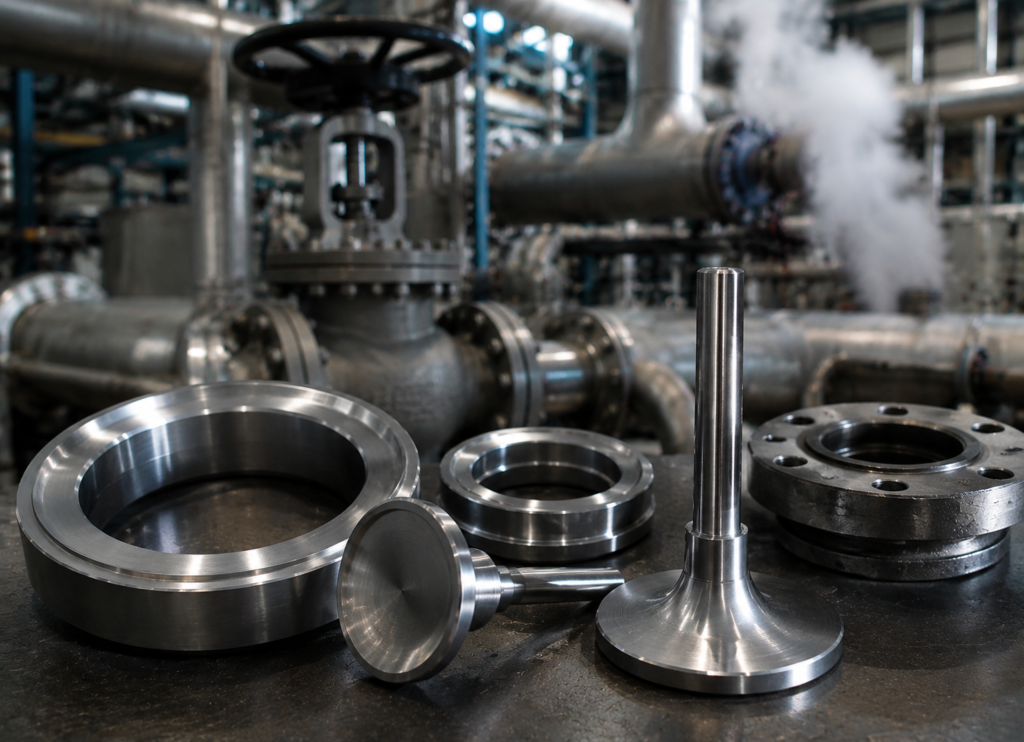
Steam valve seat material selection is not a simple hardness comparison. In power plant steam service, the sealing surface may face temperature, pressure drop, metal-to-metal contact, erosion, galling, thermal cycling, and repair constraints at the same time.
That is why engineers often evaluate cobalt-based alloy grades for valve seats, discs, seat rings, wedge sealing faces, and trim components. The right choice depends on part design and service condition, not on grade name alone.
Why Steam Valve Sealing Surfaces Need Careful Material Selection
A steam valve sealing surface must do more than resist wear. It must keep its sealing geometry while working under heat, contact stress, and flow exposure.
Important questions include:
- Is the part a seat ring, disc, wedge, plug, or trim component?
- Is the damage caused by erosion, galling, thermal fatigue, or repair quality?
- Is the component cast, wrought, machined, or hardfaced?
- Does the drawing specify a standard or only a general material description?
- Is the valve used for isolation, control, or non-return service?
If these questions are not answered, selecting a grade from a table can lead to the wrong decision.
Key Factors That Influence Grade Selection
Grade selection should consider the real valve condition.
Steam Temperature
High-temperature service requires a material that can maintain useful surface durability at operating temperature. Room-temperature hardness alone is not enough.
Pressure Drop and Flow Velocity
High pressure drop or local high-velocity steam can cause erosion. This is especially important for control valves, globe valves, and partially open or throttling conditions.
Contact Stress and Sliding Wear
Gate valves, parallel-slide valves, and some shutoff valves rely on contact between sealing surfaces. If the material pair is not suitable, galling or adhesive wear may occur.
Thermal Cycling
Startup, shutdown, and load change can create thermal stress. A grade or surface layer that looks acceptable under steady service may crack under repeated cycling.
Machining and Finishing Requirements
Valve seats and discs are functional sealing parts. Machinability, finishing method, and final contact pattern are part of the material decision.
Common Cobalt Alloy Grade Considerations
Cobalt-based alloys are available in different forms and grade families. The following descriptions are general selection logic, not fixed rules.
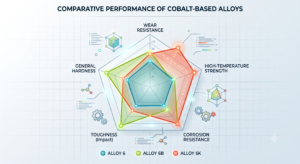
Cobalt Alloy 6
Cobalt Alloy 6 is often considered for wear-resistant valve seats, discs, and hardfaced sealing surfaces. It is commonly associated with cast, wrought, and weld overlay forms depending on specification and process route.
For engineers, the key point is to confirm whether the project requires a cast component, a wrought component, or a hardfaced layer.
Cobalt Alloy 12
Cobalt Alloy 12 is generally harder than Alloy 6 and may be considered where abrasive wear is more severe. However, higher hardness can also affect machinability and toughness. It should not be selected only because it sounds stronger.
Cobalt Alloy 21
Cobalt Alloy 21 may be considered where toughness, corrosion, impact, or thermal cycling are important factors. It is often discussed for valve trim and severe service applications where a balance of properties is required.
Cobalt Alloy 6B and Wrought Options
Cobalt Alloy 6B, commonly associated with UNS R30016 and AMS 5894, is a wrought cobalt-based alloy used in wear applications where galling and seizing risk are important. It may be relevant for some valve parts, but the part form and drawing requirement must be checked.
Standards and Equivalent References Engineers May See
Steam valve drawings and repair specifications may reference several standards or designations. Common references include:
- UNS R30006
- UNS R30016
- AMS 5387
- AMS 5894
- AWS A5.21
- ERCoCr-A, ERCoCr-B, ERCoCr-E references for hardfacing consumables
These references should not be treated as automatically interchangeable. A cast part, wrought bar, plate, powder metallurgy component, and weld overlay may share a cobalt alloy family but differ in form, process, and project acceptance.
Always confirm the drawing, purchase specification, and required manufacturing route.
Selection Logic by Valve Part
The best grade choice depends on where the material is used.
Seat Ring
A seat ring needs dimensional stability, sealing surface durability, and resistance to erosion or galling. Surface finish and contact pattern are as important as alloy selection.
Disc or Wedge
A disc or wedge sealing face sees contact wear and thermal cycling. If the mating material is poorly selected, galling can damage both surfaces.
Control Valve Trim
For severe-service control valves, the concern may be high-velocity steam, pressure drop, vibration, and trim erosion. The relevant parts may include plug, seat, cage, and guiding surfaces.
Hardfacing Layer
If the cobalt alloy is applied as a hardfacing layer, bond quality, dilution, cracking tendency, finishing method, and repair procedure become part of the material decision.
When to Ask for Engineering Review
Do not rely on a general grade description when:
- The valve leaks repeatedly after repair
- The failed material is unknown
- The drawing only lists an old designation
- The valve has high temperature and high pressure drop
- The sealing surface shows cracking or galling
- The component may be cast, wrought, or hardfaced
A practical material review should compare the valve type, failed surface, operating condition, and drawing requirement together.
Start a Material Selection Review
Send your valve type, drawing, material standard, steam temperature, pressure, and failure photos for review.
For faster communication, contact SYTOP by WhatsApp / WeChat: +86 130 0924 9727.
Use the email address shown on cobaltchromealloy.com if your inquiry needs to go through the website contact channel.
FAQ
Is Cobalt Alloy 6 always the best choice for steam valve seats?
No. It is often considered for valve seats and sealing surfaces, but the correct choice depends on temperature, wear mode, valve design, manufacturing route, and project specification.
Are UNS R30006 and UNS R30016 the same?
No. They are different designations. UNS R30006 is commonly associated with cast Alloy 6, while UNS R30016 is commonly associated with wrought Alloy 6B. Always confirm the required form and standard.
What does AWS A5.21 relate to?
AWS A5.21 is commonly referenced for cobalt-based hardfacing consumables such as ERCoCr-A, ERCoCr-B, and ERCoCr-E. This is different from ordering a cast or wrought valve component.
Can material selection be made from hardness alone?
No. Hardness is only one factor. Steam temperature, erosion, galling, thermal cycling, corrosion, machinability, and sealing geometry also matter.