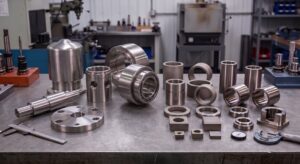
Choosing between cobalt alloy bar stock, sleeve blank, and casting blank is not only a material price comparison. A lower material quote can easily become a higher finished-part cost if excessive machining, unnecessary material removal, or unsuitable stock selection increases production time.
For cobalt alloy machining projects, three decisions should always be considered separately: material grade, stock form, and machining route. Selecting the right combination helps reduce waste, improve machining efficiency, and lower the total manufacturing cost.
Use Bar Stock When the Part Is Small or Solid
Bar stock is generally the simplest and most flexible choice for small solid components such as spacers, pins, compact bushings, or emergency replacement parts. Standard bar sizes are widely available, easy to inventory, and usually offer the shortest delivery time.
The disadvantage appears when the finished component contains a large bore. Machining a hollow sleeve entirely from solid bar means removing a significant amount of expensive cobalt alloy. Besides material waste, this also increases machining time, cutting tool consumption, heat generation, and setup costs.
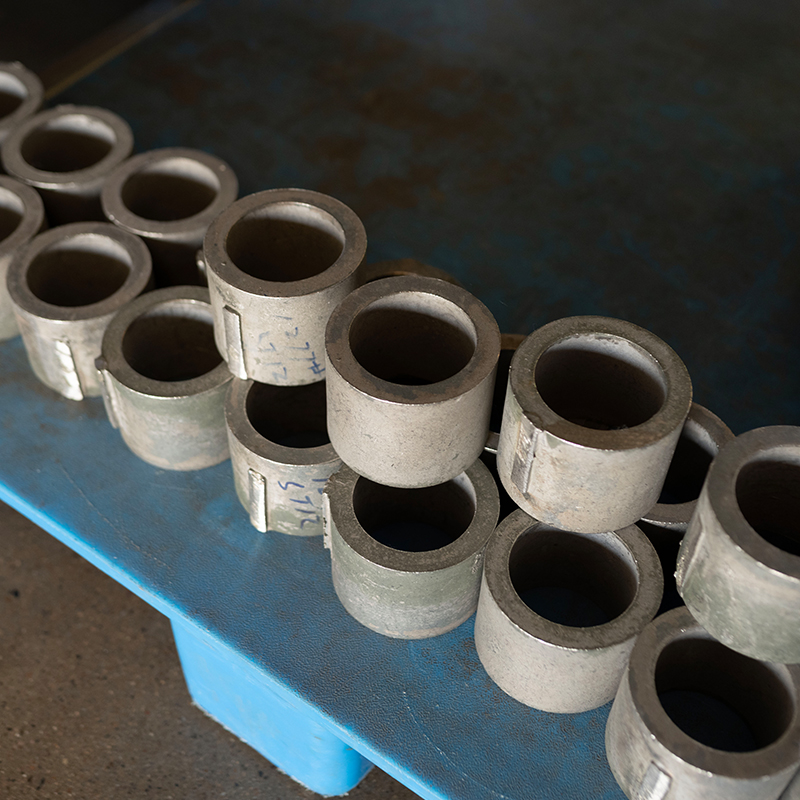
Use Sleeve Blanks When the Bore Dominates the Part
Sleeve blanks become a more economical solution when the finished component is already a hollow structure. Because much less material must be removed, machining efficiency improves while tooling costs decrease.
The machining allowance should be carefully distributed across the outside diameter, inside diameter, and end faces to ensure all functional surfaces can be completely machined.
If the rough inside diameter is too close to the finished bore, insufficient allowance may remain for cleanup machining. Conversely, if the rough outside diameter is excessively oversized, unnecessary machining time will still be required.
Use Ring Blanks for Valve Seats, Wear Rings, and Sealing Components
Ring blanks are particularly suitable for valve seats, wear rings, seal rings, and other circular wear components where concentricity, sealing surfaces, and dimensional stability are critical.
Compared with machining from solid bar, ring blanks substantially reduce rough machining while allowing machining allowance to be concentrated on the surfaces that require precision finishing.
For thin sealing rings, blank design should also consider workholding stability during machining. When finished ring thickness is relatively small, multiple rough rings may be connected together to improve clamping rigidity and machining efficiency before final separation.
The optimal blank dimensions should always be determined from the finished drawing together with the planned machining sequence.
Use Casting Blanks When the Geometry Is Too Wasteful
Casting blanks become the preferred option when finished components have large dimensions, complex geometries, or repeat production quantities.
Investment casting can produce a near-net shape that dramatically reduces machining allowance and minimizes material waste compared with machining from solid stock.
However, casting blanks require additional planning, including:
- Pattern design
- Minimum production quantity
- Machining allowance
- Dimensional tolerances
- Inspection requirements
- Acceptance criteria
For one-off repair jobs or very small quantities, casting may not provide the most economical solution.
Questions to Ask Before Selecting the Stock Form
Before purchasing semi-finished cobalt alloy stock, machining shops should evaluate several practical questions:
- How much material will actually be removed during machining?
- Which surfaces require precision machining?
- Is the project an emergency repair or repeat production?
- What inspection documents are required?
- Will hardness, composition, and internal soundness be verified?
- Does the machining shop have experience machining cobalt-based alloys?
Practical Selection Logic
The most economical stock form depends on the finished component rather than the material itself.
- Choose bar stock when flexibility, fast delivery, and low inventory complexity are more important than material utilization.
- Choose sleeve blanks when the finished component already contains a large bore and repeat machining efficiency is important.
- Choose ring blanks for valve seats, wear rings, and sealing components where concentricity and precision machining are critical.
- Choose casting blanks when large or irregular geometries would create excessive waste if machined from solid stock.
If the decision is not obvious, compare the total manufacturing cost rather than simply comparing raw material prices. For cobalt alloy components, machining time, tooling consumption, setup efficiency, and production risk often contribute more to the final cost than the material itself.
Need Help Selecting the Best Starting Form?
If you are uncertain whether your component should start from bar stock, sleeve blank, ring blank, or casting blank, simply send SYTOP your finished drawing together with the expected production quantity.
Our engineering team can review the geometry, machining process, and application requirements before recommending the most suitable semi-finished stock.
For faster communication, contact SYTOP via WhatsApp or WeChat: +86 130 0924 9727.