A high pressure hydrogen valve seat works in a narrow contact zone where sealing load, sliding distance and opening frequency meet. Once that contact band wears unevenly, leakage performance can change even when the valve body remains serviceable. Cobalt Alloy 6 is therefore considered for the seat or seating surface when the part needs greater resistance to adhesive wear, galling and local erosion.
Why High Pressure Hydrogen Valve Seats Need Wear Resistant Contact Surfaces
The seat carries spring preload and pressure-induced load while the ball, poppet or plug moves across its surface. Contact does not remain perfectly uniform around the sealing circumference. Local stress, sliding and high-velocity gas near the opening edge can produce a polished band, scoring, material transfer or gradual loss of the designed profile. Frequent actuation increases the number of contact events and makes small changes at the contact band more significant.
Cobalt based alloys are used at this interface because their carbide-strengthened structure can retain useful hardness and resist adhesive transfer during loaded sliding contact.
What Published Evidence Shows About Cobalt Alloy 6 in Hydrogen Valves
A 2023 ACS Omega study examined wear in a DN15 hydrogen ball valve operating at 35 MPa. The modeled configuration used a 316L seat substrate with a Cobalt Alloy 6 seating layer and a WC-Co coating on the ball. The researchers evaluated contact pressure, sliding distance and wear distribution as one interacting design problem. The study provides case of the alloy at a high pressure hydrogen seat interface.
| Evidence | Configuration Described | Useful Conclusion |
|---|---|---|
| ACS Omega hydrogen ball valve study | 35 MPa ball valve with a 316L seat substrate and Cobalt Alloy 6 seating layer | Direct published example at a high pressure hydrogen seat interface |
| EIGA hydrogen pipeline guidance | Wear-resistant cobalt based coatings on valve trim | Industry guidance recognizes cobalt alloys at components exposed to abrasion or wear |
| SAE material specification | AMS5387 for cobalt base investment castings | A recognized specification for the applicable cast product form |
Taken together, these sources connect the material to the wear location that matters in a hydrogen valve: the moving sealing interface. They do not reduce the valve to a material grade alone; they show why Cobalt Alloy 6 is considered when repeated contact and wear threaten the seat profile.
Where Cobalt Alloy 6 Is Used in the Valve Seat Assembly
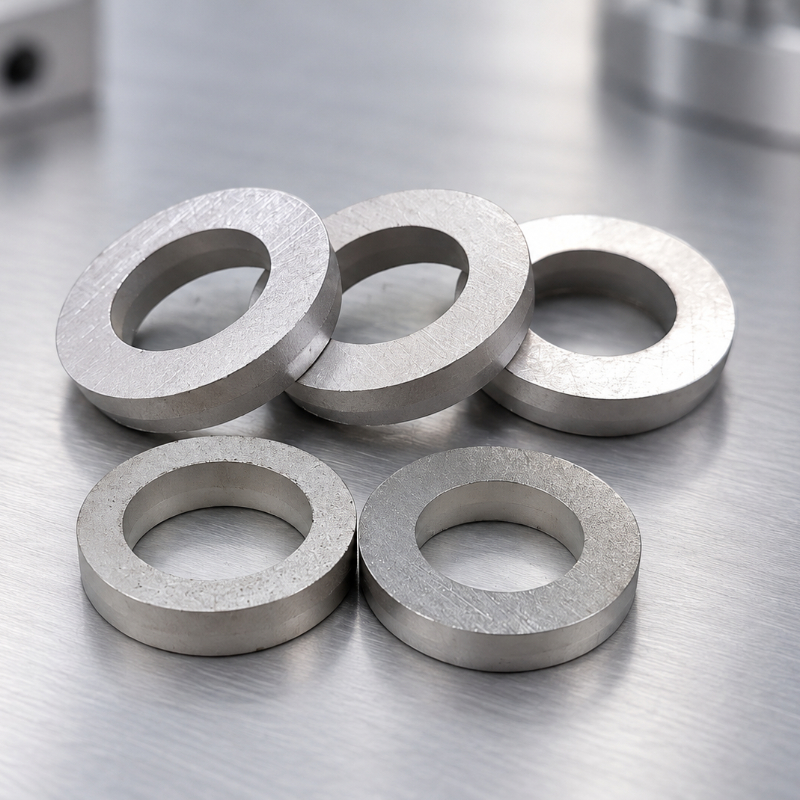
A valve may use a stainless steel structural seat with a cobalt based working layer, a replaceable Cobalt Alloy 6 insert or a solid cobalt alloy seat ring. All three arrangements place wear-resistant material at the contact zone, but they suit different valve constructions. A working layer retains the structural substrate, an insert creates a replaceable wear component, and a solid seat ring carries the selected alloy through the complete section.
The appropriate arrangement is normally established by the valve design, available installation space and expected maintenance approach. For replacement or repeat production, SYTOP supply wear parts according to the drawing and requirements.
Cobalt Alloy 6 Valve Seats Manufactured by SYTOP
SYTOP manufactures Cobalt Alloy 6 valve seats, seat rings and replaceable inserts from customer drawings. Depending on the part geometry and quantity, production can combine investment-cast near-net shapes, machining, grinding and lapping. Finished components can be supplied with the dimensional inspection and MTC.
If you are sourcing a Cobalt Alloy 6 seat for an existing high pressure hydrogen valve, send SYTOP the current drawing, required quantity and material grade. Email marketing@sytop.cn or contact WhatsApp or WeChat at +86 130 0924 9727.
References
- Li S and Zhang B. Theoretical Analysis and Numerical Simulation of the Wear of the Sealing Substrate of a High Pressure High Frequency Opening and Closing Hydrogen Ball Valve. ACS Omega 2023. https://doi.org/10.1021/acsomega.3c04506
- European Industrial Gases Association. Hydrogen Pipeline Systems. IGC Document 121.
- SAE International. AMS5387 material specification for cobalt base investment castings.